


Demystifying Luxury Condominium Pricing: A Sarasota Buyer Guide
July 12, 2026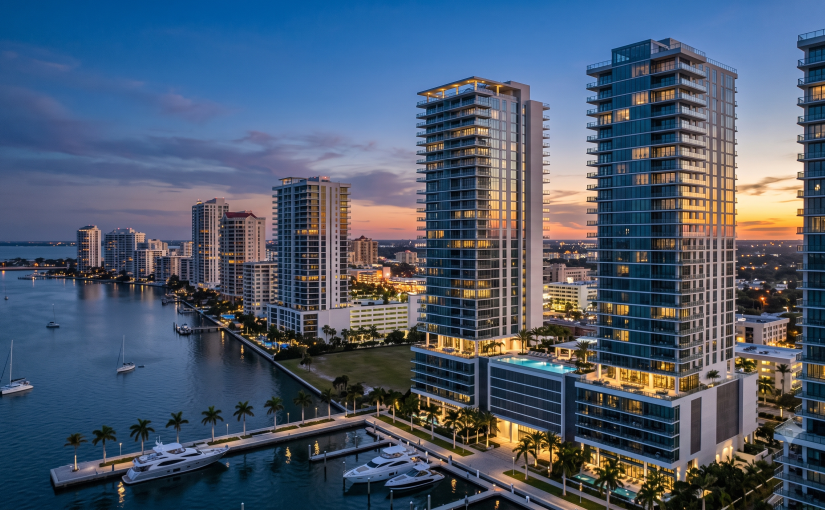
Understanding What You Are Really Paying For and How to Make Smarter Decisions
Buying a Sarasota luxury condominium is one of the largest financial decisions most people will ever make. With downtown Sarasota experiencing an active wave of new high-rise construction, including high-profile projects like the Ritz-Carlton Residences Sarasota Bay, The Edge Sarasota, and the upcoming Waldorf Astoria Residences Sarasota, understanding how developers price these residences is essential.
Why does a unit on the 18th floor cost significantly more than an identical layout on the 3rd floor? How do developers determine the numbers on the price sheet? What should you focus on when evaluating whether a residence represents true value in today’s Sarasota market?
This guide breaks down the key drivers of luxury condo pricing from the buyer perspective, using the real-world logic developers use to build and price new projects in the Sarasota market.
1. The Foundation: Location, Building, and Amenities
Before floor or view premiums enter the conversation, the building carries a base value determined by three primary factors:
- Micro-location: Waterfront versus downtown or golf course views. In Sarasota, direct Sarasota Bay or Gulf of Mexico access, or proximity to branded residences like the Ritz-Carlton Residences Sarasota Bay at The Quay or the new Waldorf Astoria Residences Sarasota at Five Points, commands a significant premium.
- Developer reputation and finishes: Branded residences, high-end interior packages, smart home systems, and resort-style amenities like spas, fitness centers, concierges, pools, and private beach access justify higher base pricing.
- Construction quality and resilience: In Florida, impact-resistant windows, elevated construction, and strong HOA reserves matter immensely for long-term ownership costs and insurance.
These factors set the base price per square foot for the project, and all other premiums are layered on top.
2. Why Higher Floors Cost More: The Floor Premium
The floor premium is the most visible element of condo pricing. Higher floors command premiums because they deliver clear advantages:
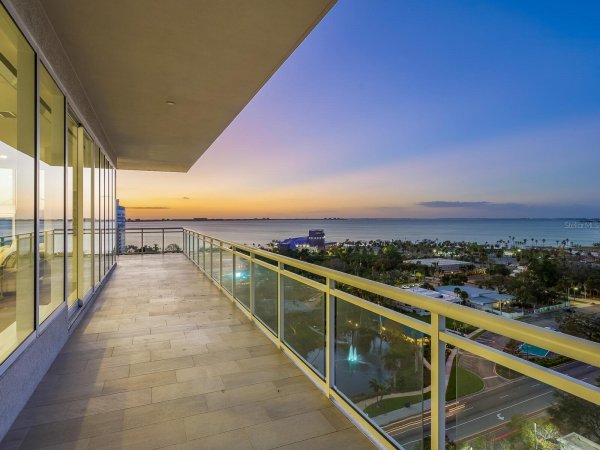
- Better, more unobstructed views, particularly direct Sarasota Bay or Gulf views.
- Greater privacy and reduced street-level noise.
- Increased natural light and enhanced prestige.
- Better airflow and distance from ground-level activity.
Empirical studies of high-rise condos show average premiums of roughly 2 to 2.5 percent per floor above the lowest residential level, though this varies by market and actual view quality. In Sarasota Bay-front towers, the cumulative premium from the 3rd floor to the top can reach 30 to 50 percent or more once unobstructed water views are achieved.
The premium is not purely linear. In many buildings, the biggest jumps occur once you clear surrounding buildings or tree lines. The very top floors, especially penthouses, carry an extra scarcity premium because inventory is limited.
Sarasota Buyer Tip: Mid-to-upper floors often offer the best balance of value, providing excellent Sarasota Bay or downtown views without paying the maximum top-floor premium. With multiple new towers coming online in a tight window, lower floors in some projects may offer more negotiating room as developers manage absorption across the competitive downtown pipeline.
3. View and Orientation Premiums
Not all units on the same floor are priced equally. Within a single level, pricing can vary by 10 to 25 percent or more depending on layout and exposure:
- Primary view direction: Direct Sarasota Bay or Gulf of Mexico views versus city skyline or neighboring buildings. In current downtown Sarasota projects, unobstructed bay views are the strongest drivers of price differentiation.
- Corner versus interior units: Corners usually have more windows, better light, and dual exposures.
- Obstructions: Future development potential that could block views is a critical risk factor to evaluate in growing downtown markets.
Developers assign specific view multipliers to individual units. A waterfront corner unit on floor 15 might carry a 20 to 30 percent premium over a standard interior unit on the same floor. Always ask what the actual view looks like from the specific unit and whether any future development has been approved nearby.
4. How Developers Actually Set Prices
Developers rely on structured financial modeling to set pricing sheets:
- Target total sell-out revenue: Based on land costs, construction costs, desired profit margins, and market absorption studies.
- Base pricing: Derived from comparable recent sales in similar buildings, adjusted for the new project amenities and location.
- Premium layering: Floor premiums, view premiums, unit size differentials, and penthouse uplifts are applied mathematically.
- Velocity modeling: Prices are stress-tested against expected sales pace. Over-pricing the top units can slow down the momentum of the entire project.
The goal is to hit the total revenue target while selling out the building within a standard 18 to 36-month timeframe for a mid-sized luxury tower.
5. What the Sticker Price Does Not Tell You
The published price is only part of the equation. Smart buyers must also evaluate the broader financial picture:
- Total cost of ownership: Monthly HOA fees can range from 1500 to 4000 dollars or more in luxury high-rises. Factor in special assessments, insurance, and property taxes.
- Resale liquidity: Higher-floor, water-view units in well-managed buildings tend to hold value better and sell faster during market transitions.
- Negotiation room: Developers often have more flexibility on lower floors, end-of-quarter targets, or slower-moving inventory lines. Cash buyers or those purchasing larger units frequently receive better terms.
- Incentives: Developer-paid closing costs, design center credits, furniture packages, or included parking and storage options can effectively lower your net purchase price.
6. Practical Questions to Ask Before Buying
- What is the price per square foot for this specific unit compared to similar units in the building and comparable nearby projects?
- How exactly was the floor premium calculated, and what specific view does this unit guarantee?
- Are there any approved or proposed developments that could affect future views or natural light?
- What is the current absorption pace by floor? Are lower floors selling slower?
- What are the realistic monthly carrying costs including HOA, taxes, and insurance?
- Are there any current incentives or upcoming price increases planned for the next sales phase?
Luxury condominium pricing is a blend of market data and developer strategy. The visible premiums for floor and view are real, but the best unit is not always the most expensive one. The ideal property is the one where the specific premiums you pay align directly with the lifestyle and investment characteristics you value most.
Understanding how developers construct pricing gives you leverage. You can identify negotiating room, recognize true value when it appears, and avoid overpaying for marginal differences in floor height. Treat luxury condo pricing as a data-informed negotiation rather than a fixed menu.
This article is for educational purposes. Always conduct your own due diligence and consult with qualified real estate professionals, attorneys, and financial advisors familiar with the specific project and market.
Are you currently evaluating a specific downtown Sarasota development, or would you like to compare the floor plans and pricing structures of two upcoming projects side by side?

Sarasota Perry
Founding Agent at Compass. Specializing in the curation and sale of Sarasota’s most prestigious branded residences, including The Ritz-Carlton, Waldorf Astoria, and St. Regis. With a deep commitment to white-glove service and market intelligence, I help discerning clients secure their piece of the Florida Gulf Coast’s most exclusive addresses.
Email: perry.corneau@compass.com
Website: http://www.sarasotaperry.com
Recent Posts
Unrivaled Coastal Luxury: The Definitive Guide to Living and Investing at BLVD Sarasota
Standing 18 stories above Downtown Sarasota’s sparkling Bayfront district, BLVD Sarasota (540 N Tamiami Trail) represents the pinnacle of boutique coastal urban...
Read more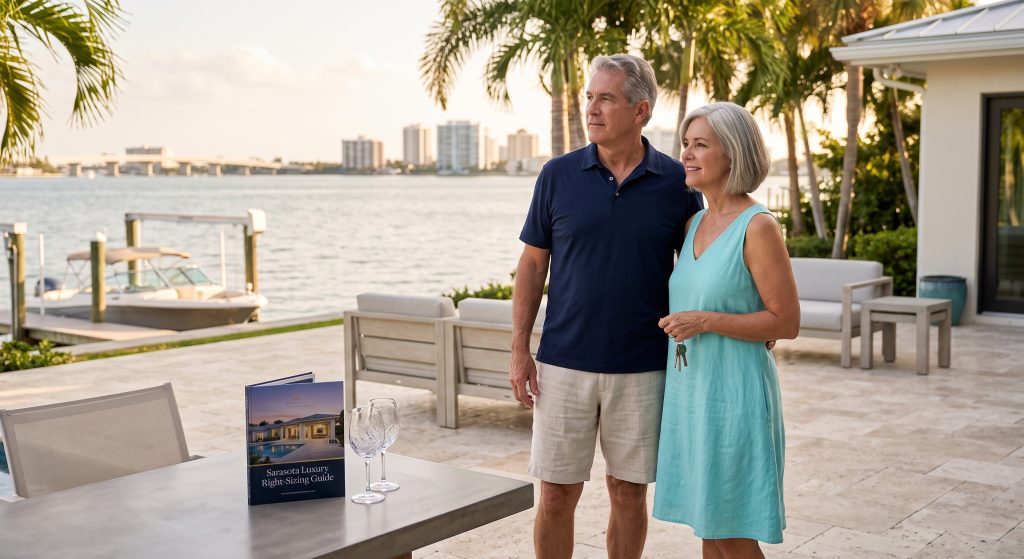
Empty Nesters in Sarasota: What Comes After the Big Family Home?
Empty Nesters in Sarasota: What Comes After the Big Family Home? In a week or two, the last suitcase gets packed for...
Read more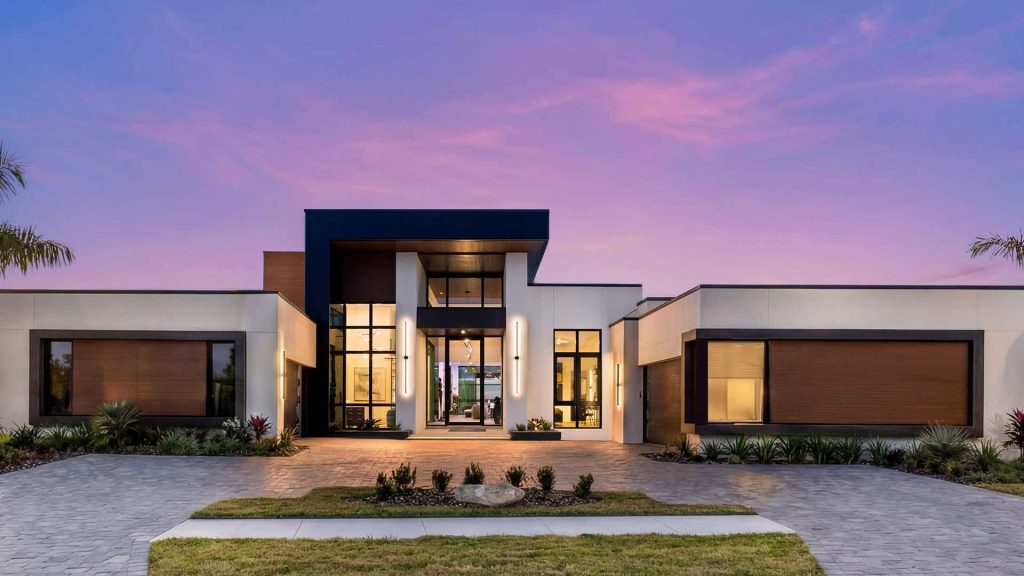
Fit for an Arch-Nemesis: Inside "The Oulina" by John Cannon Homes
https://youtu.be/pujlITYgRDo?si=EVSAzaMK_sQZa_yv Every cinematic mastermind needs a lair. It shouldn't just be a place to live—it should be a statement of supreme confidence,...
Read more
Discovering Oyster Bay: Sarasota’s Timeless Waterfront Enclave
Tucked along the eastern shores of Roberts Bay in Sarasota, Florida's coveted "West of Trail" corridor, Oyster Bay (often referred to as...
Read more