


The HOA “Exit Ramp”: What Florida’s New Dissolution Rules Mean for You
March 31, 2026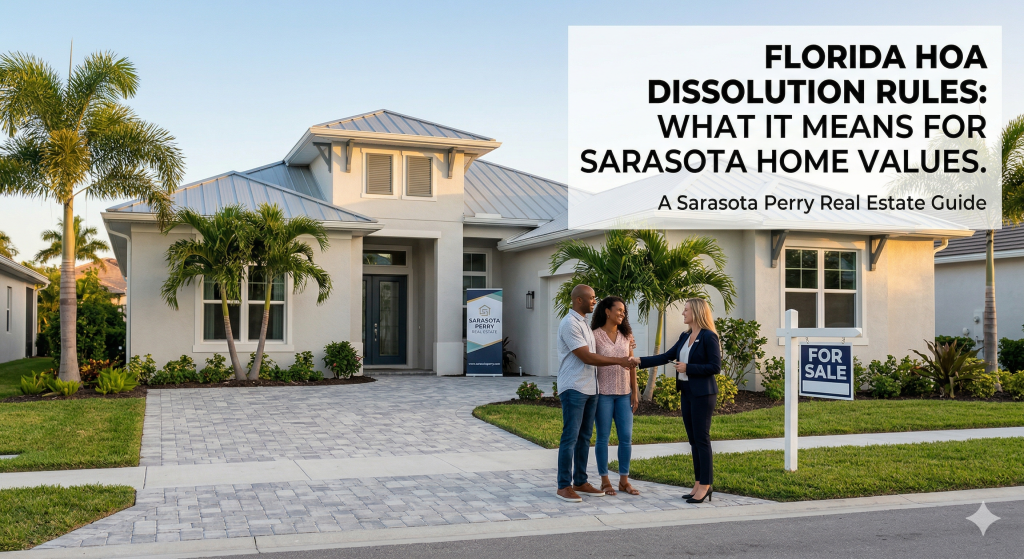
The landscape of Florida homeownership is shifting. With the 2026 legislative session introducing unprecedented flexibility for homeowners to dissolve their associations, many Sarasota residents are asking what this means for their property rights and their bank accounts.
At Sarasota Perry Real Estate, we’re tracking these changes in real-time. Here is everything you need to know about the “HOA Exit” in a quick, Q&A format.
Q: Is it really possible to just “get rid” of my HOA now?
A: Yes, but it’s a high bar to clear. Under Florida House Bill 657 (2026), officially known as the Homeowners’ Association Dissolution and Accountability Act, homeowners have a structured legal pathway to terminate an association. It typically requires a petition of 20% of homeowners to start the conversation and a two-thirds majority vote of the entire membership to finalize the “Plan of Termination.” You can track the full bill text and its progress on the Florida House of Representatives website.
Q: How will dissolving an HOA affect my home’s resale value?
A: It’s a double-edged sword.
- The Upside: Your home becomes more “affordable” on paper because there are no monthly dues. In a market where carrying costs are high, a $0 HOA fee is a massive selling point. This is particularly relevant as Sarasota’s market rebalances in 2026, with buyers seeking more control over their monthly expenses.
- The Downside: HOAs provide “architectural consistency.” Without one, your neighbor could park a commercial semi-truck on their lawn or paint their house neon purple, which could negatively impact your curb appeal and valuation.
Q: What happens to the “common areas” like the pool or the front gate?
A: This is the most complex part of the 2026 rule. Before an HOA can dissolve, it must have a court-approved plan for its assets.
- Roads: If they are private, the county must agree to take them over (which often requires bringing them up to municipal code first).
- Amenities: Pools or clubhouses are often sold to private entities or dismantled. If the infrastructure isn’t handled correctly, the neighborhood could face a decline in quality of life. Detailed compliance timelines for associations can be found on the Florida DBPR resource page.
Q: Will it be easier or harder to sell my home without an HOA?
A: It depends on the buyer. We are seeing a surge in “HOA-fatigued” buyers who want the freedom to park a boat, build a shed, or plant a garden without a permit. For these buyers, a non-HOA home is a premium find. However, some lenders have strict requirements regarding road maintenance agreements that could make financing slightly more complex in a newly dissolved community. If you are looking for luxury properties in Sarasota, many buyers still prefer the managed excellence of branded residences.
Q: Does this mean I can finally stop following the “Blue House” rules?
A: Once the dissolution is legally recorded and the restrictive covenants are canceled, yes. You regain full control over your property’s aesthetics. However, you are still subject to Sarasota County or City of Sarasota zoning and code enforcement, which cover basics like grass height and noise.
Q: Should our community consider dissolving?
A: If your HOA is well-managed and maintains high-end amenities that protect your equity, dissolution is likely a bad move. However, if your HOA provides little more than “enforcement” and has high fees with no tangible benefits, the new 2026 rules offer a much-needed exit ramp. For more on modern property standards, see our guide on 2026 Luxury Kitchen Trends.
The Verdict
The “No HOA” trend is the biggest shift in Florida real estate this decade. Whether you are looking to buy into a community with more freedom or sell a home in a transitioning neighborhood, having an expert who understands these new statutes is essential.
Curious about how your specific neighborhood stacks up?
Would you like me to run a comparative market analysis to see how “No HOA” homes are currently performing against managed communities in your zip code?

Sarasota Perry
Founding Agent at Compass. Specializing in the curation and sale of Sarasota’s most prestigious branded residences, including The Ritz-Carlton, Waldorf Astoria, and St. Regis. With a deep commitment to white-glove service and market intelligence, I help discerning clients secure their piece of the Florida Gulf Coast’s most exclusive addresses.
Email: perry.corneau@compass.com
Website: http://www.sarasotaperry.com
Recent Posts
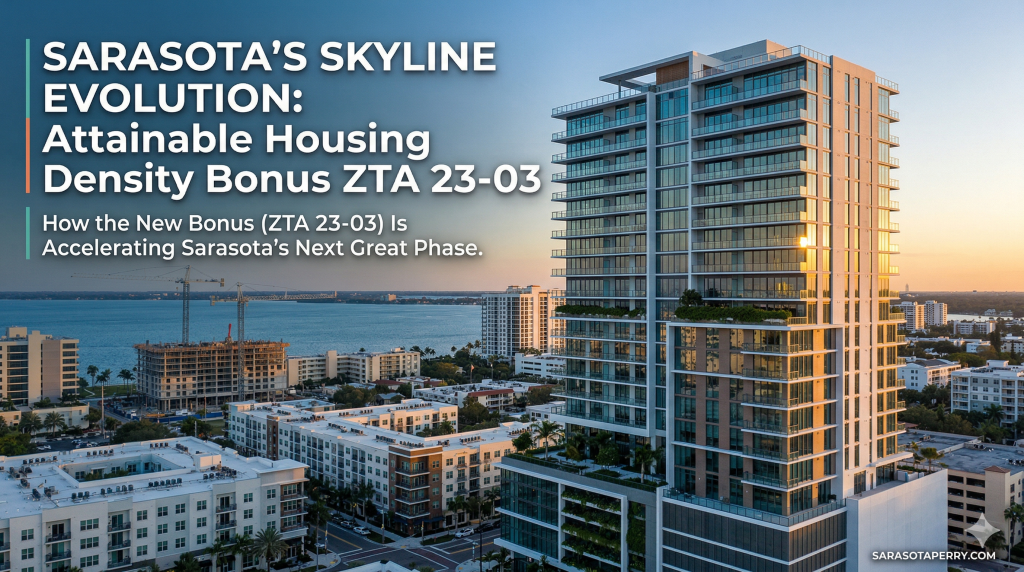
Breaking the Density Ceiling: What Zoning 23-ZTA-03 Means for Sarasota’s Skyline
f you’ve walked through the Rosemary District or the Downtown Core lately, you’ve noticed the crane counts are up. But it isn't...
Read more
A Century of Elegance: The Sarasota Opera House Celebrates 100 Years
In the heart of downtown Sarasota, a Mediterranean Revival masterpiece stands as a testament to the city's enduring love for the arts....
Read more
This Week in Luxury Real Estate — Sarasota County
The Sarasota County luxury real estate market continues to demonstrate resilience and targeted momentum as we move into the spring 2026 season....
Read more
Elevated by Design: Why Alinari is the Ultimate Power Move for Today’s Successful Woman
In the world of high-stakes careers and constant connectivity, a home shouldn't just be where you sleep it should be where you...
Read more