


8 things Sarasota Perry knows about FinCEN When Purchasing Real Estate in a Trust
February 7, 2026Search Blogs
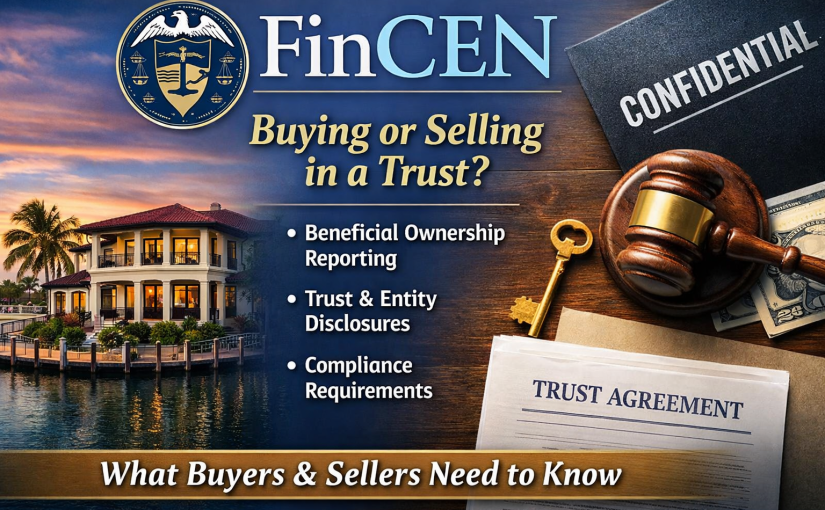
If you’re buying or selling real estate through a trust, you may have heard about new federal reporting rules tied to FinCEN. These requirements are becoming increasingly relevant in Florida and other high-value real estate markets, and they can directly affect how transactions are structured, documented, and timed.
This article breaks down what FinCEN is, why it matters, and what buyers and sellers should understand especially when a trust is involved.
What is FinCEN and why does it matter in real estate?
FinCEN is the U.S. government bureau responsible for combating money laundering, fraud, and other financial crimes. In recent years, real estate has become a major focus because property purchases particularly those made through legal entities or trusts can obscure who actually controls or benefits from the asset.
To address this, FinCEN has expanded beneficial ownership reporting requirements, increasing transparency around who is behind certain real estate transactions.
The key change buyers and sellers should understand
Under FinCEN’s rules, certain entities and trusts involved in real estate transactions must disclose their beneficial owners. This generally means identifying the real people who ultimately own, control, or benefit from the trust or entity purchasing the property.
This information is not public, but it is reported to the federal government and may be reviewed by law enforcement or regulatory agencies if needed.
How this affects purchases made in a trust
Buying real estate in a trust is still very common and still legal but it now comes with additional disclosure responsibilities.
Depending on the structure of the trust, reporting may include:
- The trustee
- The grantor (settlor)
- Certain beneficiaries
- Any individual with control or decision making authority
Not every trust is treated the same. Revocable trusts, irrevocable trusts, estate-planning trusts, and asset-protection structures can all trigger different reporting obligations.
What sellers should know
If you are selling a property owned by a trust, you may be asked to:
- Provide documentation confirming who controls or benefits from the trust
- Certify information for closing compliance
- Coordinate with legal counsel earlier in the process
This does not typically delay a sale, but failing to prepare in advance can.
What buyers should know
If you are buying in a trust, especially:
- As a high-net-worth individual
- With multiple beneficiaries
- Using a newly created trust
- Or purchasing luxury or waterfront real estate
You should expect:
- Additional paperwork
- More questions from title companies or attorneys
- A need for accurate, up-to-date trust documentation
This is not a reason to avoid using a trust, it’s simply a reason to plan ahead.
Why this matters in Sarasota and other luxury markets
In markets with:
- High-value transactions
- Second-home and investment purchases
- Estate and asset-protection planning
FinCEN compliance is increasingly standard. Title companies, closing attorneys, and brokerages are aligning their procedures to ensure transactions meet federal requirements.
For buyers and sellers who value privacy, it’s important to understand that FinCEN reporting is confidential, but not optional.
Common misconceptions
“This means I can’t buy anonymously anymore.”
You can still buy using a trust or entity, but anonymity is no longer absolute at the federal level.
“This only applies to corporations or LLCs.”
Certain trusts are absolutely included, depending on structure and control.
“This will slow down my closing.”
Only if preparation is delayed. With proper planning, transactions typically proceed smoothly.
The smart way to navigate FinCEN requirements
The most successful transactions today involve:
- Early coordination with legal and tax advisors
- Clear understanding of trust structure
- Accurate and timely disclosures
- An experienced real estate professional who understands how these rules impact closing logistics
Final thoughts
FinCEN’s expanded focus on real estate isn’t about discouraging trust ownership but rather it is about transparency. Buyers and sellers who understand the rules early can avoid surprises, protect their interests, and move forward with confidence.
If you are buying or selling real estate in a trust and want to understand how FinCEN requirements may affect your transaction, contact Sarasota Perry. Having the right guidance early can make the difference between a smooth closing and unnecessary complications.

Sarasota Perry
Founding Agent at Compass. Specializing in the curation and sale of Sarasota’s most prestigious branded residences, including The Ritz-Carlton, Waldorf Astoria, and St. Regis. With a deep commitment to white-glove service and market intelligence, I help discerning clients secure their piece of the Florida Gulf Coast’s most exclusive addresses.
Email: perry.corneau@compass.com
Website: http://www.sarasotaperry.com
Recent Posts

The Pinnacle of Coastal Living: Rosewood Residences on Florida’s West Coast
For the discerning individual, a home is more than a structure; it is an experience, a legacy, and a sanctuary. On the...
Read more
The Perfect Pivot: From Palm Ave to Savoy
Strategy Meets Opportunity in a Seamless, Off-Market Deal Sometimes, the best moves happen before the rest of the world even knows they’re...
Read more
The Alinari Advantage: Why 1,830 Square Feet is the New Luxury Standard in Downtown Sarasota
https://youtu.be/gUMe6DuswGA?si=ZRqsciyjrQv9f9lW In the high-stakes world of Downtown Sarasota real estate, 2026 has become the year of the Housing Reset. As glass-and-steel towers...
Read more
Construction Timeline: The Ritz-Carlton Residences, Sarasota Bay
The evolution of Sarasota’s waterfront has been defined by moments of architectural brilliance and unparalleled luxury. Perhaps no single name is as...
Read more